Decolonising business through regulation: From CSDDD to EUDR and CBAM

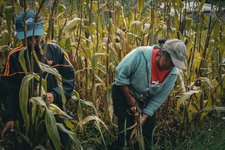
Phyllis Lilienthal, Unsplash
by Carlos Mario Gómez, supply chain and ESG expert
European sustainability regulation is often framed as a bureaucratic burden disconnected from “real business.” That narrative is not only tired; it is dangerous.
Because what we are witnessing with the Corporate Sustainability Due Diligence Directive (CSDDD), Deforestation Regulation (EUDR) and Carbon Border Adjustment Mechanism (CBAM) is not regulatory overreach. It is a structural correction. One that forces European business to confront a long‑standing blind spot: value has been created for decades by externalising costs – socially, environmentally, and geographically.
Regulation as a mirror, not a checklist
CSDDD, EUDR and CBAM force companies to look at themselves more honestly — their impacts, risks and dependencies. Unlike earlier transparency‑led approaches, these regulations move beyond visibility toward responsibility.
CSDDD asks a simple but uncomfortable question: if your value chain depends on harm, what is your responsibility to prevent it?
This is where many organisations become uneasy. Due diligence exposes power asymmetries. It reveals how risk, volatility and environmental damage are often pushed upstream – to suppliers, communities and ecosystems with the least leverage.
That discomfort is precisely the point.
EUDR and CBAM: pricing what we used to ignore
EUDR and CBAM are often treated as technical trade instruments. They are not.
EUDR forces companies to confront the true origins of commodities that have powered European growth – timber, cocoa, soy, coffee. It challenges the idea that deforestation is someone else’s problem, happening “elsewhere,” disconnected from European consumption.
CBAM does something equally radical: it puts a price on carbon that was previously embedded, invisible and conveniently ignored. It disrupts the illusion that global supply chains are neutral, when in reality they are shaped by regulatory arbitrage.
Together, these regulations say something very clear: Europe will no longer build competitiveness on invisible damage.
A quiet shift in power
What ties CSDDD, EUDR and CBAM together is not reporting, audits or data points. It is a rebalancing of power.
For decades, suppliers – especially outside Europe – were asked to be flexible, cheap and silent.
Sustainability requirements existed, but enforcement was weak and optional. Now, due diligence, traceability and carbon pricing force companies to engage differently. Contracts change. Conversations change. Expectations change.
This is why some call these regulations “anti‑competitive.” In reality, they are anti‑extraction.
Decolonising business, quietly
Decolonisation is often misunderstood as a political slogan.
It means recognising that our operating models were built in a world where environmental limits, labour rights and local voices could be ignored.
CSDDD challenges that by extending responsibility beyond the first tier. EUDR challenges it by reconnecting products to land and ecosystems. CBAM challenges it by exposing the carbon intensity of global trade.
None of this is symbolic.
The real risk: doing the minimum
The greatest danger for European companies is not these regulations. It is responding to them defensively – treating them as another box to tick, another cost to absorb.
Those who approach CSDDD, EUDR and CBAM with the same mindset they once applied to CSR policies will struggle. Not because regulators are unforgiving, but because markets are changing.
Trust, resilience and long‑term access to resources cannot be automated.
From compliance to leadership
There is an opportunity here for accountability and honesty.
The companies that will lead are not those with the cleanest spreadsheets, but those willing to redesign relationships, invest upstream and accept that short‑term efficiency is sometimes the enemy of long‑term value.
These regulations are not asking businesses to save the world. They are asking them to stop pretending they are disconnected from it.
And that may be the most radical shift European business has faced in decades.
Carlos Mario Gómez is a supply chain and sustainability expert having worked with a range of ESG data platforms, companies, as well as in climate education. His current position is at IntegrityNext. Earlier in his career he was a professional football player in Colombia’s División Mayor de Fútbol. This piece was first published on Linkedin.